…and how psychopathology may save the nation from putting a crazy person in the White House.
[And we’re back! It’s been an event-filled four month absence and I’ve had plenty to say–just been too lazy to say it in writing. So with 100 days or so to go, we lightly tiptoe back into the ring.]
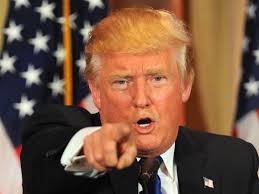 There is an almost audible sigh of relief exhaling from the sane portion of the U.S. electorate this week, as poll after post-DNC-convention poll shows Hillary Clinton opening an increasingly wide gap over the Republican nominee, clown of renown Donald Trump. What is developing into a heady optimism from Democrats certainly seems justified. After all, their candidate is currently running stronger in the horse race–margin-wise–than Obama did at the same point in both 2008 and 2012. And given Trump’s joyride on the Crazytown bus the last 10 days, over which the GOP has purportedly reached a “new level of panic,” one might well ask: “How could this ever become a close race?” Well, let’s take a look.
First, about those polls. It’s always very important to keep in mind who’s being surveyed for the horse race questions. To an overwhelming degree, Hillary Clinton’s lowest leading margins (and Trump’s largest leading margins, post-RNC convention–his “bump”) over the last month or two, have been in polls marked ‘LV’, meaning likely voters–a smaller, presumably more predictive, set of respondents than those in the RV pool: registered voters.
Every pollster has their own algorithm for determining who a likely voter is, but the clear trend here, across all pollsters, is that the likely voter pool is unquestionably more favorable to Trump than the registered voter pool. A likely-voter poll, to the degree the pollster can manage, surveys the roughly 50% to 55% of voting age population who will actually vote. (Registered voters make up 67% of that universe. Yes folks, fully one-third of those eligible to vote have not even bothered to register to do so. Who says democracy is in trouble in America? But that’s a post for another time.)
As we get closer and closer to Election Day, the number of likely voter polls will increase until about a month out, when you will see only polls of likely voters. Plus, the algorithms become better predictors of likely voters because of the questions asked to make that determination (e.g., “how likely are you to vote?” More people have made this calculus in October than in August, so the likely voter pool gets enriched with more and more likelier voters as Election Day approaches.)
The media will tout this phenomenon as a tightening race, when in fact it’s simply that more polls coming out are more accurately reflecting the true state of the race with regard to how the actual voting will go. But the media memes of a closer race will in fact, of course, serve in and of themselves to tighten the race. It’s the perceived pull of the crowd, the perceived momentum factor.
Also, more than ever this year, look for your best guidance in the four-way polling that includes both the Libertarian candidate Gary Johnson and the Green Party’s Jill Stein. So far, their inclusion draws more from Clinton than from Trump by almost a full percentage point. It says a lot that in a year in which the Libertarian party is polling at historical highs, the net result, with the Greens included, hurts rather then helps the Dems, since Libertarian support normally hurts Republicans.
These are warning signs, but ultimately the closeness of a race and the final prevailing wind is determined by two vectors: (1) which side has more of the more likelier voter pool (this amount to more voters who are more motivated) and (2) which side has the better organization in place to motivate and mobilize supporters to vote on their behalf.
I’m not the first person to point out that in terms of the first vector, there is a decided lack of positive enthusiasm in favor of the Democratic nominee this year. But if this were a race of simply which side has the worst negs, Hillary Clinton would probably still cruise untouched to the winner’s circle in November. It’s only by understanding the positive forces at work here (positive from a purely non-ideological political strategy point of view, that is; ideologically I don’t see much, if anything, positive in Trump’s campaign) that it’s possible to see how the gap narrows and where the danger lies.
So let’s look at Trump’s likely voters and their level of motivation. Who are they? Well, a heaping portion of them are the exact same slice of the electorate that the Democratic Party has been disengaging from since the 70s, about the same time these folks’ incomes started to flatline. I’m talking about the white working class and their economically downtrodden brethren, in solidarity with which the party of FDR used to proudly stand.
It is the kind of people who are, to cite one of many examples, squeezed by so-called payday lenders–you know, the industry donating to and being looked after by former DNC chair and now honorary Hillary Clinton chair, Debbie Wasserman Schultz through favorable legislation so they can continue their usurious lending practices against the working poor. But that’s just the microcosmic metaphor. If you want to fully understand the very real extent to which the Democratic party has abandoned this group of American voters, Thomas Frank’s new book Listen, Liberal, is a must-read. You can sample a slice which ran not too long ago in Harper’s here. Even if you have no doubt this is the case and you think you already understand, read it anyway.
In short, Trump’s base is a group of voters whose problems are no longer front and center for the Democratic establishment (and haven’t been for awhile), to whom the Democratic party no longer speaks and for whom Donald Trump’s convention speech was, largely, written and delivered.
If you don’t think this is a motivated group of voters, think again. Trump just raised 80 million dollars last month–almost as much as Hillary–mostly through Bernie-sized contributions. And media coverage of that fact will produce the same Bernie-effect, namely fuel even more small dollar gives. This is a segment of the electorate that is pretty much out of reach for Hillary Clinton, because of both her own and her party’s sins, and one that Donald Trump has yet fully to mine. Many of them have gone from unregistered voters to likely voters.
Now imagine that come September, Trump manages to shed his narcissistic, ADD egomaniacal (emphasis on maniac) self just enough to get back to the message of his convention speech for the following eight weeks. The one where he talks about the disintegration of manufacturing jobs base at the hands of Democrat-pushed and Democrat-blessed trade deals, where he vows to be the voice of this increasingly economically desperate slice of America; the one where he offers them, you know, hope. That my friends, becomes one inspired group of voters, true believers.
Regardless, this election is fated to be much closer than it is now because that’s what our elections do these days; and no one ever went broke overestimating the appetite of Americans for candidates with overly simplistic, unnuanced worldviews. Will Hillary win? My answer is still, yeah, most likely she will. But if Trump manages to find his voice again, many more nails will be bitten between now and then than you could ever now imagine in these days of large Hillary poll margins.
The good news is that what most prevents Trump from doing what he needs to do to get closer and win (i.e. be doggedly on message) are his truly, very real psychopathological disorders; and pathologies are hard things to shake. No matter where he goes or how fast he runs, there he is. This and a superior Democratic organizational effort (the second determinant above), an advantage which they now have, can save the day.
 The Election Junkie
[…] get the idea. And this phenomenon is both tragic and dangerous. What I wrote about in early August? It’s happening, folks. Trump has largely been collared and leashed and is pretty much […]
LikeLike